Choosing Stainless Mesh Filter: Opening Size, Wire Diameter and Application
THE BUYER'S GUIDE / SELECTION
Choosing Stainless Mesh Filter: Opening Size, Wire Diameter and Application
Selecting the right stainless mesh filter depends on matching opening size, wire diameter, material grade and physical form factor to your specific filtration task. This guide explains those core criteria and shows how two confirmed product formats — the stainless steel filter mesh cylinder and the wire mesh filter disc — address different industrial requirements, helping buyers narrow their choice before requesting a custom specification.

Opening size (filtration accuracy / aperture): match the mesh aperture to the target particle cut-off; fine filtration duties such as 10-micron or 200-micron applications require a precisely specified opening, while coarse duties such as 1/4-inch stainless mesh screening allow a larger aperture.
Wire diameter and open area: heavier wire diameter increases structural rigidity and pressure resistance but reduces open area and throughput; finer wire maximises open area but lowers mechanical strength — balance these against operating pressure and flow requirements.
Material grade and corrosion environment: stainless steel provides corrosion resistance and high-temperature capability; confirm alloy compatibility with the process fluid, cleaning chemistry, and any food-grade or pharmaceutical requirements.
Physical form factor and installation interface: cylindrical filter elements suit inline housings and process vessels; flat filter discs suit flanged seats, pump inlets, and clamped ports — the equipment interface determines which geometry is applicable.
Industry and process requirements: chemical processing, machinery, automotive, food, pharmaceutical, and water treatment each impose distinct pressure, temperature, and regulatory constraints that influence opening size, wire diameter, and material selection.
Why Specification Matters When You Choose a Stainless Mesh Filter
A stainless mesh filter is not a single product — it is a family of components defined by interlocking dimensional and material parameters. Getting the opening size or wire diameter wrong by even a small margin can mean particles pass through unchecked, pressure drop climbs too high, or the mesh deforms under operating load. This guide walks through the key selection criteria so you can enter a supplier conversation with a clear brief.
Core Selection Criteria
1. Opening Size (Filtration Accuracy)
The opening size — sometimes called mesh aperture or pore size — determines which particle sizes the filter retains. Common reference points in industrial practice range from coarse separations (several millimetres, as in a 1/4-inch stainless mesh used for large-particle screening) down to fine filtration at 10 micron or 200 micron levels, where even fine contaminants in liquids or gases are captured. Match opening size to the smallest particle you must retain, not to a round number on a standard mesh chart.
2. Wire Diameter
Wire diameter and opening size together determine the percentage of open area in a mesh panel. A thicker wire at the same opening size reduces open area, increases structural rigidity and raises resistance to flow. A finer wire maximises open area and throughput but reduces mechanical strength and collapse resistance under differential pressure. For high-pressure filtration duties, a heavier wire diameter is preferred even if it slightly reduces open area.
3. Material Grade and Corrosion Environment
Stainless steel is chosen over plain steel primarily for its corrosion resistance. The working environment — acids, alkalis, saltwater, food-grade contact, high temperatures — determines which alloy is appropriate. The material must be compatible with both the fluid being filtered and the cleaning chemistry used to regenerate the filter element. Hebei Qunhui Metal Products Co., Ltd. notes that its stainless steel filter products are engineered with excellent corrosion resistance and high temperature resistance, enabling use across harsh working conditions encountered in chemical, pharmaceutical, food processing, and water treatment industries.
4. Physical Form Factor
Does the application call for a cylindrical element that fits inside a housing, or a flat disc that seals against a flange or seat? These two geometries suit very different equipment interfaces:
- Cylindrical filter elements are inserted axially into filter housings and are common in in-line pipeline systems, hydraulic circuits, and process vessels.
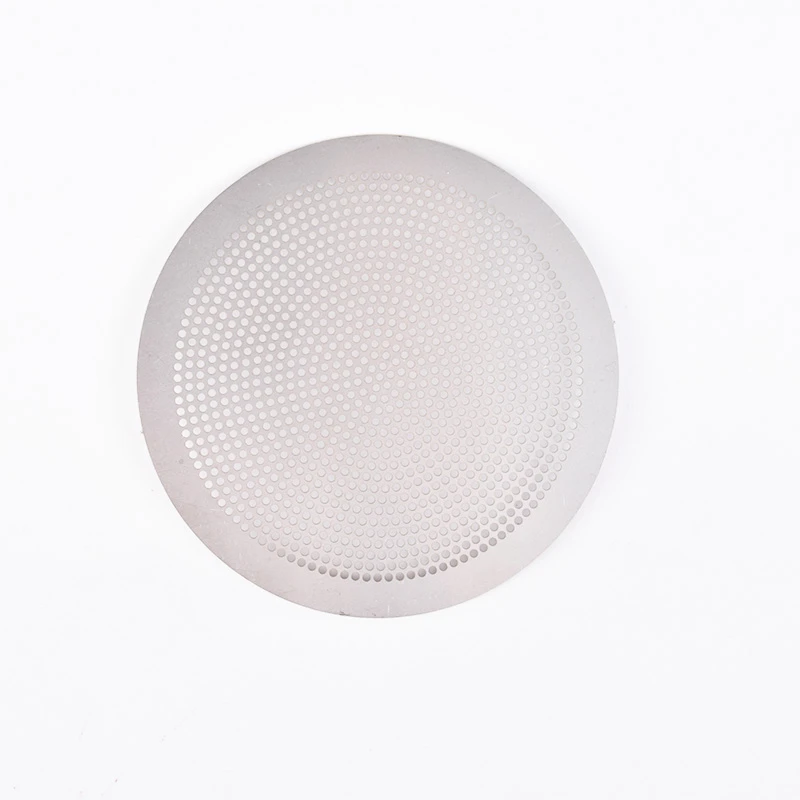
- Flat disc filters are clamped between flanges, pressed into end-caps or fitted into circular ports; they appear widely in pumps, laboratory apparatus, and equipment inlets.
5. Industry and Process Requirements
The duty cycle, temperature range, and regulatory context of the target process all influence the final selection. Chemical production, machinery manufacturing, automotive, food processing, pharmaceutical manufacturing, and water treatment each impose distinct demands. Understanding the process stream — liquid or gas, batch or continuous, high or low viscosity — helps narrow the appropriate mesh specification before comparing products.
Applicable Product Formats
Stainless Steel Filter Mesh Cylinder
The stainless steel filter mesh cylinder is a fabricated tubular component constructed from high-quality stainless steel. It is suited to applications requiring an in-line or immersed cylindrical element in industries including chemical processing, machinery manufacturing, automobile production, food processing, pharmaceuticals, and water treatment. Advanced production technology is applied to maintain dimensional accuracy, ensuring stable filtration performance whether the duty involves separating solid particles or removing liquid impurities.
Best suited to: Pipeline filter housings, strainer baskets, pressure vessels, and continuous-flow process systems where a self-supporting cylindrical element is required.
Wire Mesh Filter Disc
The wire mesh filter disc is a flat filtration component available in a range of materials (stainless steel, copper, aluminium) and mesh sizes, delivering fine filtration accuracy for both liquid and gas streams. Shapes include round, square, rectangular, oval, and special profiles, giving design flexibility to match diverse equipment footprints. Two construction types are available within this product series, accommodating different structural and installation requirements.
Best suited to: Pump inlets, instrument connections, equipment apertures, and any application requiring a flat filter element clamped or pressed into a seat rather than housed in a cylindrical barrel.
Comparison at a Glance
| Criterion | Filter Mesh Cylinder | Wire Mesh Filter Disc |
|---|---|---|
| Form factor | Tubular / cylindrical | Flat / planar |
| Primary installation | Inline housing or vessel | Flanged seat or clamped port |
| Available shapes | Cylindrical | Round, square, rectangular, oval, special |
| Material options | Stainless steel | Stainless steel, copper, aluminium |
| Typical industries | Chemical, automotive, pharmaceutical, food, water treatment | Filtration, separation, gas/liquid across multiple industries |
Selection Decision Path
- Define particle cut-off — establish the maximum particle size allowed in the downstream process. This fixes the required opening size.
- Assess pressure and flow — higher differential pressures call for heavier wire diameter and a robust construction type.
- Identify the installation interface — cylindrical housing or flat-seat determines whether a cylinder or a disc is required.
- Confirm material compatibility — match the alloy to the fluid, temperature range, and any food-grade or chemical-resistance requirements.
- Specify shape and dimension — provide bore diameter and length for cylinders; outer diameter, inner diameter, and thickness for discs.
Following this path produces a specification brief that allows Hebei Qunhui Metal Products Co., Ltd. to confirm the appropriate product, mesh count, and wire gauge for your application.
Summary
A well-chosen stainless mesh filter depends on aligning opening size with the target particle cut-off, selecting wire diameter to balance open area against mechanical strength, choosing the right alloy for the operating environment, and matching the physical form factor to the installation interface. The stainless steel filter mesh cylinder and the wire mesh filter disc each serve distinct equipment interfaces. Confirming these criteria before requesting a quote reduces the likelihood of specification errors and accelerates procurement.
THE PEOPLE

About the author
THE COMPANY
Hebei Qunhui Metal Products Co., Ltd.
Provide high-quality wire mesh processing and balcony photovoltaic solutions, contact us now! Our company focuses on deep processing of wire mesh and has advanced production equipment and an experienced technical team.Providing high-precision customized services, the products include metal filters, stainless steel mesh baskets, stainless steel wire mesh, metal decorative mesh, etc., with reliable quality, durability and anti-corrosion.…
About Us ↗Visit company website ↗YOUR NEXT STEP
Bring your brief. Start a useful conversation.
Use case, specification, quantity and delivery window: make the next conversation specific.